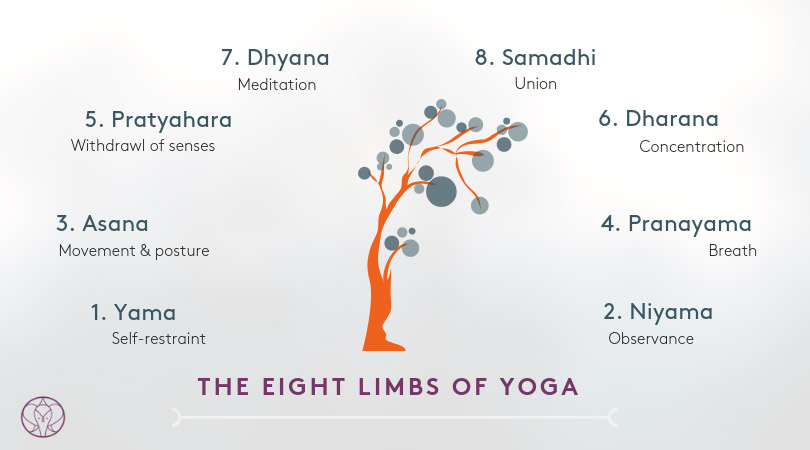
Yoga is more than just the physical postures we often associate it with today. At its core, yoga is a complete lifestyle and spiritual path that guides us toward self-realization, inner peace, and alignment with the universe. One of the most profound frameworks within yoga philosophy is the system of Ashtanga Yoga — the Eight Limbs of Yoga — as outlined by the sage Patanjali in the Yoga Sutras. These eight limbs serve as a roadmap for living a meaningful, ethical, and spiritually fulfilling life.
The journey begins with Yama, a set of ethical restraints that help us navigate our relationships with others and the world. Practicing the following principles cultivates compassion, integrity, and simplicity:
- Ahimsa – non-violence
- Satya – truthfulness
- Asteya – non-stealing
- Brahmacharya – moderation
- Aparigraha – non-possessiveness
Niyama, the second limb, consists of personal observances that deepen our connection with ourselves. These include:
- Shaucha – purity
- Santosha – contentment
- Tapas – discipline
- Svadhyaya – self-study
- Ishvarapranidhana – surrender to a higher power
While modern yoga often begins with asana, the third limb, its true purpose is to prepare the body for stillness and meditation. The practice of steady, comfortable postures helps to develop physical strength, flexibility, and endurance, but more importantly, it allows us to sit in meditative stillness for extended periods without discomfort.
Following asana is pranayama, the control of breath. Breath is the bridge between the body and the mind, and by learning to regulate it, we influence our mental and emotional states. Practices like alternate nostril breathing, kapalabhati, and bhramari help to energize the body, calm the nervous system, and focus the mind.
Pratyahara, the fifth limb, is the withdrawal of the senses from external distractions. This practice turns our awareness inward, allowing us to detach from the noise of the world and cultivate inner awareness. It marks the beginning of deeper meditative work, helping us to observe our thoughts and sensations without becoming entangled in them.
With the senses quieted, we move into dharana, the sixth limb, which is concentration. This involves fixing the mind on a single object, sound, or idea — such as the breath, a mantra, or a candle flame. It’s through this consistent practice of concentration that we begin to tame the restless mind and build the focus necessary for meditation.
When concentration becomes uninterrupted, it naturally flows into dhyana, or meditation, the seventh limb. Meditation is a state of deep, effortless awareness where we experience stillness, clarity, and connection with something greater than ourselves. It is not just an act but a state of being — a sustained flow of awareness that brings peace and insight.
Finally, the journey culminates in samadhi, the eighth limb — a state of blissful union with the divine. In samadhi, the ego dissolves, and the practitioner experiences unity with all life. It is the ultimate goal of yoga, a state of liberation where the individual self merges with universal consciousness.
While each limb offers its own practice and benefits, they are deeply interconnected. Ashtanga Yoga is not a linear path but a holistic system where progress in one area supports growth in others. Whether you are just beginning or have been on the path for years, returning to these limbs can ground your practice and remind you that yoga is a journey of the body, mind, and soul.